Choosing a new construction home in Vilonia can feel exciting and a little overwhelming. Floor plans look similar on paper, but small layout choices make a big difference in your daily life, especially if you commute to Conway or Little Rock or work from home. This guide walks you through the most popular layouts buyers ask for in 72173, what they do well, where they fall short, and how to evaluate them on a model-home tour. You will leave with checklists and smart wish lists you can use right away. Let’s dive in.
Why floor plan matters in Vilonia
Vilonia’s humid summers and severe-weather season shape how homes live. Strong HVAC, smart insulation, and the option to add a safe room are practical, not just nice-to-have. You can review design ideas using FEMA guidance on residential safe rooms and refresh storm safety basics with the NOAA tornado safety overview. If you are eyeing a specific lot, check flood risk through the FEMA Flood Map Service Center.
Many buyers choose between subdivision builds with lower-maintenance yards and smaller builders that allow more customization and larger lots. Families often weigh proximity to schools with commute times and the need for flexible spaces at home. Remote workers should verify internet options by address and test cell coverage at likely workspace locations during tours.
Open-concept layouts
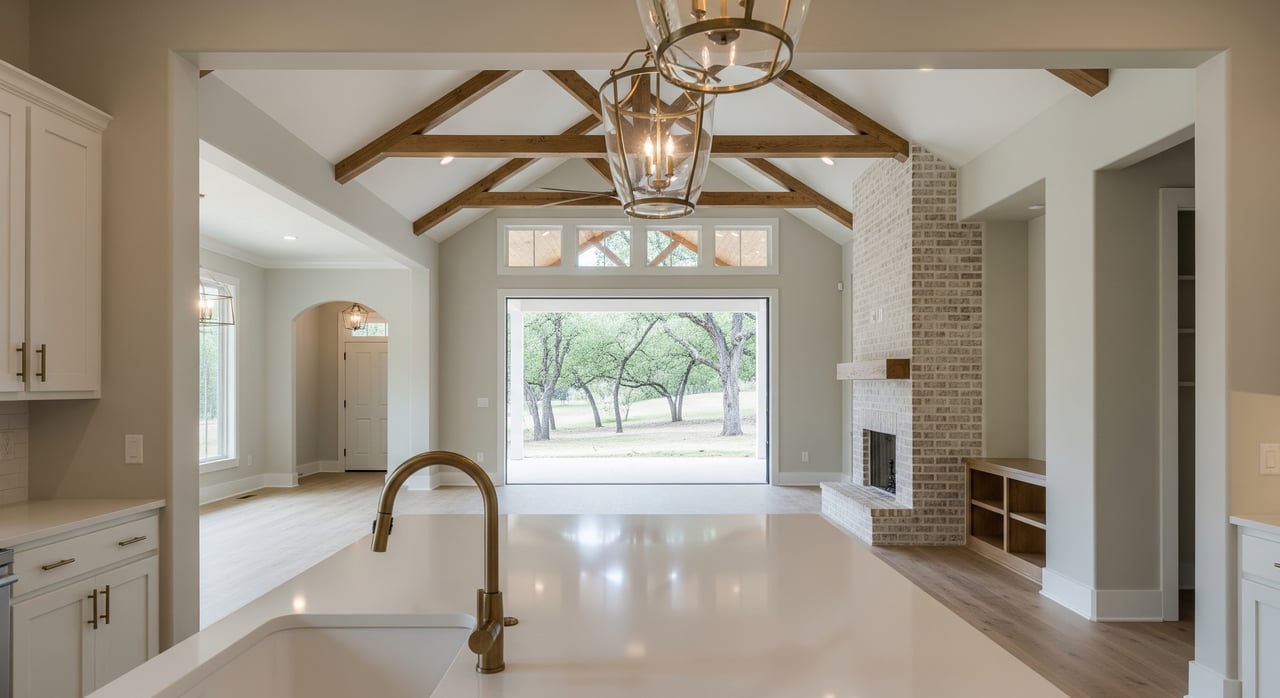
Open-concept homes combine kitchen, dining, and living into one shared space with minimal walls.
- Advantages
- Excellent sightlines and easy social flow for cooking, homework, and hosting.
- Creates a larger feel in a modest footprint and works well for entertaining.
- Disadvantages
- Noise travels, which can disrupt naps or calls.
- Less wall space for storage and fewer doors for privacy.
- Comfort can be uneven without HVAC zoning in big shared spaces.
- Tips for families
- Pros: Simple supervision of kids from the kitchen and better together time.
- Cons: Limited quiet zones for naps or homework.
- What to check: Clear views to play areas, durable flooring, a defined drop zone or mud bench, pantry size.
- Tips for remote workers
- Pros: Occasional work at the island or table can be fine.
- Cons: Not ideal for daily, focused work without a separate room.
- What to check: A nearby den, nook, or flex room that can close off; options for pocket doors or a half wall to create separation.
- Tour checklist
- Ceiling height, kitchen island size, traffic flow, HVAC supply and return placement, and any builder options for added partitions.
Split bedroom plans
Split bedroom plans place the owner’s suite on one side of the home and secondary bedrooms on the other.
- Advantages
- Strong privacy for parents, guests, or multigenerational living.
- Better separation for a home office if a secondary bedroom becomes a workspace.
- Disadvantages
- Longer walks between bedrooms can be inconvenient with toddlers.
- More hallway space can reduce usable square footage in a compact footprint.
- Tips for families
- Pros: Fewer nighttime disturbances and better privacy as kids get older.
- Cons: Less direct supervision for very young children.
- What to check: Sightlines from living areas, distance to kids’ rooms, and bath access.
- Tips for remote workers
- Pros: A bedroom on the opposite wing can serve as a quiet office.
- What to check: Windows for natural light, closet storage for gear, placement of outlets and data, and door thickness for sound.
- Tour checklist
- Solid-core interior doors, wall insulation, hallway width, and HVAC return locations for comfort and noise control.
Primary on main
With a primary-on-main plan, the owner’s suite is located on the ground level.
- Advantages
- Single-level living for daily routines and easy access to the garage and backyard.
- Practical for aging in place or navigating life with an infant.
- Disadvantages
- If the footprint is fixed, upstairs bedroom count can shrink.
- Some buyers prefer the privacy of an upstairs primary.
- Tips for families
- Pros: Fewer stairs with young kids and better accessibility overall.
- Cons: May limit the number of bedrooms upstairs.
- What to check: Distance from main living noise, convenient laundry access, and nursery or office flexibility.
- Tips for remote workers
- Pros: Pair a first-floor primary with a nearby office or use an upstairs flex room for quiet.
- What to check: Primary closet size and layout if a small desk niche is helpful, bathroom placement for daytime use.
- Tour checklist
- Hallway width, door clearances, and the ability to reconfigure a closet to a small office if needed.
Flexible bonus spaces
Bonus rooms, lofts, dens, and flex rooms offer adaptable square footage for work or play.
- Advantages
- Multi-use potential: playroom, office, guest room, gym, or media room.
- Strong resale appeal because future buyers can tailor the space.
- Disadvantages
- Base models may be under-insulated or lack full HVAC.
- Over-garage rooms can be hot or cold without upgrades.
- Tips for families
- Pros: Ideal for play zones, homework, or a teen hangout.
- Cons: If unfinished, budget for completion costs.
- Tips for remote workers
- Pros: A dedicated room with a door is best for calls and focus.
- What to check: Ceiling height, natural light, electrical and data outlets, and soundproofing potential.
- Tour checklist
- Confirm if the space is finished and climate controlled, what the base price includes, and whether pre-wiring for data is available.
Other local options
- Ranch plans: Single-story living simplifies maintenance and can support aging-in-place priorities.
- Two-story plans: Maximize bedrooms and bonus space on smaller lots common in subdivisions.
- Builder modifications: Many area builders allow upgrades like a mudroom, added office, or extra bath. Ask for a list of standard features versus upgrades.
Vilonia tour questions to ask
The right questions save you time and protect your budget in 72173:
- Acoustics and privacy: Ask about interior wall insulation and door types for quieter rooms.
- HVAC and energy: Request HVAC sizing, zoning options, SEER ratings, and insulation R-values.
- Internet and wiring: Confirm available providers for the address, whether CAT6 is included, and where the network entry point sits.
- Natural light and orientation: Review window placement, glare at likely workstations, and porch or overhang depth for summer shading.
- Foundation and water: Identify slab versus crawlspace and verify drainage; check FEMA flood maps for the lot.
- Storm safety: Ask about a reinforced interior closet or a safe-room option following FEMA safe-room guidance.
- Storage and mudroom: Evaluate garage-to-kitchen flow, pantry size, and drop zones.
- Materials and exterior: Discuss moisture-resistant cladding, roof warranty, and gutters.
- Accessibility: Look for wider halls and doors, zero-step entries, and main-level laundry.
- HOA and lot rules: Review setbacks and accessory-structure guidelines with the builder and county.
Quick tour checklist
- Which plan is standard versus upgraded, and what is included in the base price?
- Foundation type and any known drainage or floodplain issues for this lot.
- HVAC size, number of zones, and efficiency ratings.
- Insulation R-values and window performance or ENERGY STAR details.
- Sound control features in walls and ceilings, and door types.
- Internet providers for the address and hard-wired network options.
- Electrical panel location and number of outlets in planned office areas.
- Whether bonus rooms are finished and climate controlled.
- Storage: pantry, linen closets, attic and garage square footage.
- Garage size and door insulation.
- Options and pricing to add an office or safe room, or to reconfigure a bedroom.
- Builder warranty coverage and construction timeline.
Smart wish lists
Families
- 3 or more bedrooms and at least two full baths.
- Laundry near bedrooms or on the main level.
- Mudroom or drop zone with easy garage access.
- Finished, climate-controlled bonus space for play or guests.
- Durable finishes and an option for a storm-safe area.
- Generous pantry, linen storage, and garage or attic space.
Remote workers
- A dedicated, enclosed office with natural light and a door.
- Pre-wired or conduit-ready network connectivity; hard-wired Ethernet if possible.
- Quiet location for the office: split-plan bedroom, den, or flex room.
- A second flex space for overflow work or occasional client meetings.
- HVAC zoning or capacity that keeps the office comfortable all day.
- A nearby half bath or full bath.
Hybrid households
- One dedicated office plus an additional flex space.
- Open sightlines for supervising kids while using a nearby work nook.
- Soundproofing upgrades for office doors and walls.
- Easy access to outdoor space and parking for deliveries or visitors.
Red flags to note
- Bonus room not fully finished or lacking proper HVAC.
- Base price excludes typical must-haves without clear upgrade pricing.
- No documentation for energy specs or HVAC sizing.
- Lot shows poor drainage or is in a mapped floodplain.
- Limited or slow internet provider options for the address.
Finding the right fit in Vilonia is about matching your daily routine to a smart layout, then confirming the build details that protect comfort, safety, and resale. If you want help narrowing plans, pressure-testing options for remote work, or coordinating builder tours and inspections, reach out to Danielle Newton Hunt for local, new-construction guidance tailored to your goals.
FAQs
What is an open-concept plan and who benefits in Vilonia?
- Open-concept combines kitchen, dining, and living; it suits families who value sightlines and hosting, but remote workers may need a separate den or flex room for quiet.
Are split bedroom layouts good for working from home in 72173?
- Yes, a secondary bedroom on the opposite wing often doubles as a quieter office with better privacy and sound separation.
What should I ask Vilonia builders about storm safety?
- Ask if the plan supports a reinforced closet or safe room designed using FEMA safe-room guidance and confirm where the safest interior space is located.
How do I check flood risk for a specific 72173 lot?
- Enter the property location into the FEMA Flood Map Service Center and discuss drainage with the builder.
Does a first-floor primary help resale in Faulkner County?
- Often, yes; a primary on main and flexible spaces appeal to a broader pool of future buyers, including families, aging homeowners, and remote workers.
How can I evaluate internet for remote work in Vilonia?
- Confirm provider options by address during tours, ask about CAT6 or conduit to the attic, and test cellular and Wi‑Fi performance where you plan to work.